Central Serengeti, May 2026
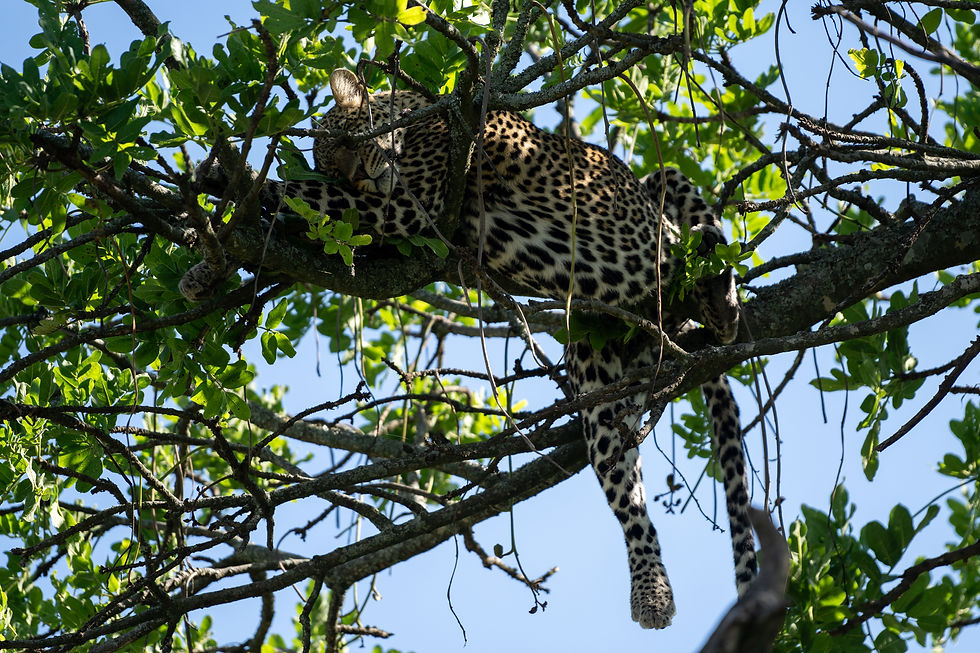
Leopard spotting in the savannah is a rather special art form. Leopards are shy, elusive and practically invisible among the sun-struck leaves of the canopy. Spots blend with shadows, tails turn into branches, white belly dissolves into grey bark. So we knew we were up for a challenge on that cool January morning when we heard that a female leopard nearby had gone out to hunt the night before. Nobody had seen her catch prey or knew where she had settled for the day, but our guide was confident we would spot her...
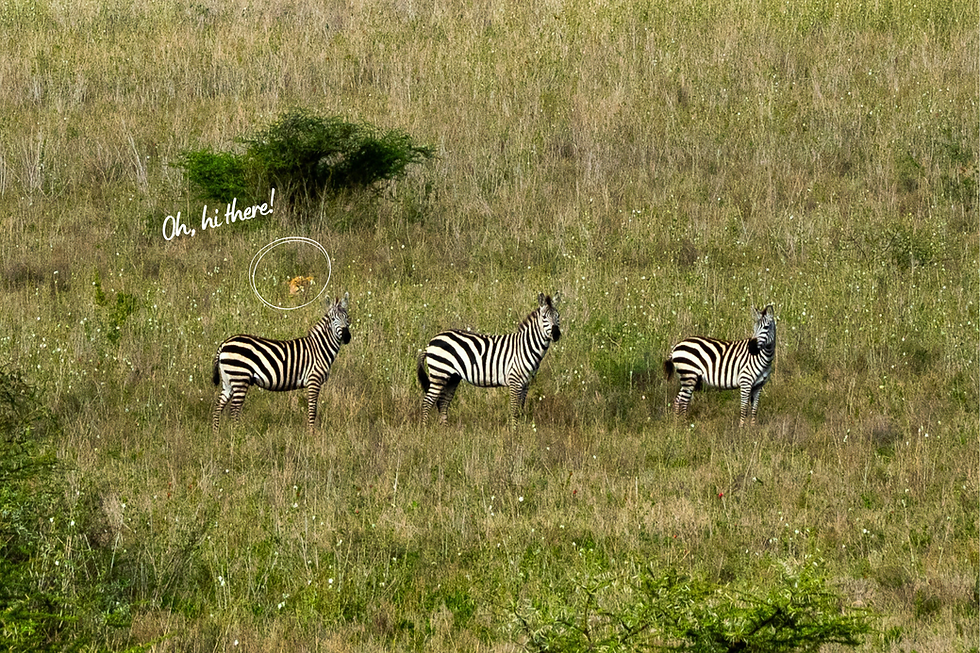
The sun was barely peaking above the horizon when we set out on our search. We knew the drill. Leopards in the open plains lounge in comfortable tall trees with branches suitable for lying down and storing fresh prey. Apropos, sausage trees are their favourite. So step one was finding the right kind of tree; a “leopard tree”, as we call them. We drove down to a small stream surrounded by perfectly comfortable leopard-friendly vegetation. So far, so good! Now for the hard part: actually spotting a leopard in the leopard tree. Might sound easy, but don’t be fooled. Leopards have the incredible talent of completely disappearing in the greenery; true masters of disguise. There is only one way to spot a leopard. You need to look for something dangling: a tail, a leg or perhaps prey.
We knew that the leopard in question had gone out to hunt, so we were looking for her prey; an impala’s belly is easier to spot than a leopard’s tail. Leopards store their catch on tall branches to hide them from hyenas and lions, so it is not uncommon to see a dead antelope hanging from a tree. An eerie sight but good news for the leopard spotter; it means a leopard is nearby!
Oh well, the pictures give it away; we did indeed find her after an hour of slow drive-by along the river bank. She had managed to catch a whole impala. We, of course, noticed the prey first and took a good few minutes to find the sleeping leopard next to her in the tree.
So why am I telling you this story? When we started building Ethera a few years ago, we quickly found out that spotting a leopard and spotting the right spot for accommodation in the bush are not that different; and are both equally hard. So let me tell you how we do it...
Accommodation in the bush is of course very different from your typical city hotel. The number one priority when on safari is always to be close to nature in a way that does not disrupt it. So we optimise for a few things:
Location: Location is perhaps the most important element of good safari accommodation. If possible, it’s always best to be close to the action, so we always advise our guests to opt for accommodation inside the park. This is especially important for big safari parks like Maasai Mara. Being inside the park means you can be out on the plains early, as soon as park authorities allow (usually around 6:30 am), without having to drive from outside and wait to enter at the park gates. And being out early is important: big cats are notoriously drowsy during the day, so the best time to spot them is around sunrise and sunset. Not to mention, animals often come close when you are staying at a lodge inside the park. I have had countless visitors in my tents: from big curious elephants to nervous antelopes, and even a curious little baby leopard (see our blog post from March 2026).
Footprint: Another critical aspect of good safari accommodation is its relationship with the nature around. A camp with a low footprint, fewer tents and a clear mandate for conservation is always our first choice. A big part of the reason we started Ethera was to not only show people the magic of those wild parts of the African continent, but to also contribute to preserving them.
Budget: Budget is, of course, a key decision-maker with safari accommodation. Prices can go very high for more extravagantly luxurious spots or relatively low for bigger camps located further from the park. So we select the camps we work with very carefully, always optimising for finding the best value for money while not compromising on quality.
Intimacy: Smaller camps are always better. Not only do you feel closer to nature, they also disrupt the environment around them a lot less. The trick is finding small boutique camps that still carry a reasonable price tag. Those are difficult to spot - and our key priority when selecting our partner properties.
Service: Service is, of course, key for a good holiday experience of any kind. When out in the bush, it is all the more important to make sure the camp staff is well trained, the guides are passionate and knowledgeable, and the chef is skilled and creative.
So how do we make sure all of these are fulfilled when choosing accommodation for our guests? We carefully hand-pick camps and lodges and, whenever possible, personally visit all of them to make sure they fulfil the promises they make. It is, indeed, a slow, painstaking process of looking for hanging tails, protruding white bellies and the right kind of trees where these elusive spots might be hiding!


Comments